The Man Who Built Genius: What László Polgár Proved About Human Potential - and Why I Built the Residency.
Every so often, an idea changes everything.
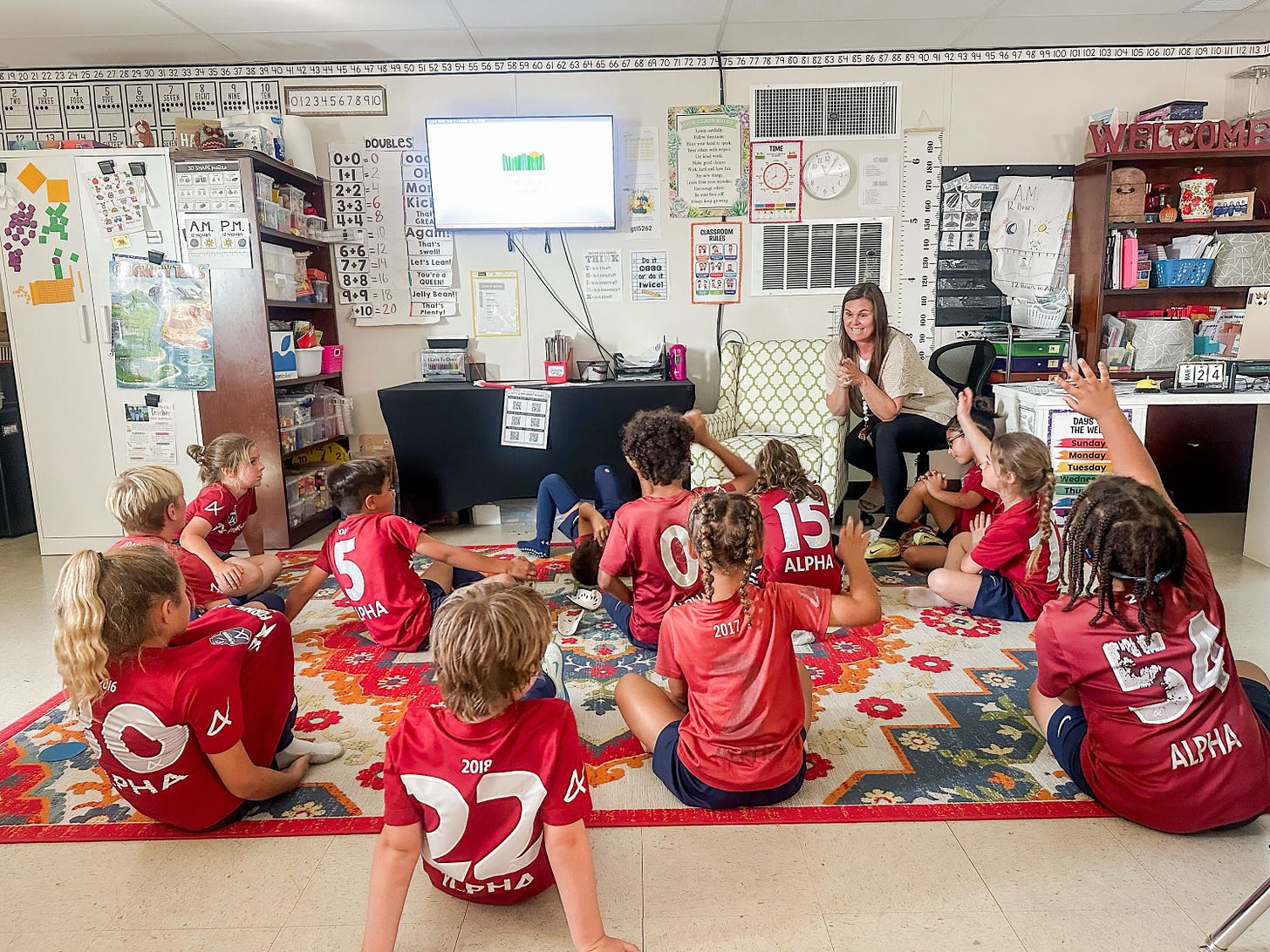
For me, that idea was Residency, a living experiment in what happens when education, neuroscience, and football development merge into one system.
If you’ve ever wondered what the Forms Residency really is, or why I built it in the first place, this story explains both. It began with a question I’ve been asked countless times: “Why are you so obsessed with player development?”
My answer starts with a man named László Polgár - the scientist who proved that genius isn’t born, it’s built.
#### The Man Who Built Genius: What László Polgár Proved About Human Potential and What Comes Next
Most people talk about potential like it’s fate. You have it, or you don’t. Some kids are born gifted, others just aren’t.
László Polgár refused to believe that.
He was a Hungarian educator and psychologist who made a radical claim decades before neuroscience had the vocabulary to support it: genius is not born, it’s engineered.
And then, instead of just saying it, he decided to prove it.
#### The Experiment No One Thought Would Work
Polgár was a scientist, but he didn’t run a lab; he ran a home, a living, breathing experiment in human development.
He and his wife chose chess as their test case, not because it was easy, but because it was measurable, universal, and brutally intellectual. Before they could even read, they introduced the game to their three daughters, Susan, Sofia, and Judit. As parents and scientists, they didn’t push; they guided.
Their home became a kind of academy where books were everywhere, lessons were woven into daily life, and curiosity around the game never stopped. Polgár believed that if you expose children to a domain early, build their confidence through structured progress, and make learning emotionally rewarding, their brains literally rewire to specialize.
Modern science later proved him right. Neuroplasticity, the brain’s ability to physically change with use, accelerates in early childhood. Myelination, the process of insulating neural pathways through repetition, speeds up with focused practice. And dopamine-driven reinforcement ensures that learning linked with joy becomes deeply encoded.
Polgár created the perfect conditions for all three. And the results were astonishing. By age 10, his daughters were competing against adults; by 15, they were beating them. All three became chess masters. Judit, the youngest, became the greatest female chess player of all time, breaking into the top ten of all players worldwide, male or female.
Polgár didn’t just raise exceptional children. He rewrote what we thought was possible.
#### The System Behind the Genius
What made Polgár’s approach groundbreaking wasn’t the amount of time his daughters trained; it was how their environment was designed to make learning inevitable. He fused structure with emotion, discipline with love. Every lesson had purpose; every challenge was slightly harder than the last. Their home was a feedback loop: learn, test, reflect, repeat.
He proved that excellence isn’t random. Excellence is environmentally engineered, what happens when repetition meets curiosity in a supportive setting.
Today, we use phrases like deliberate practice or cognitive scaffolding to describe what Polgár intuitively understood. But the science of learning now confirms that he was operating decades ahead of his time.
His daughters weren’t “born different.” Their environment made them different.
Why His Ideas Still Matter
Most youth systems, whether in sport, school, or music, still mistake talent as something that just “shows up.” They confuse statistics for science, mistaking the law of large numbers for development. If enough kids play long enough, a few will stand out. But that isn’t talent emerging; that’s randomness rewarded.
Polgár flipped that logic. He didn’t look for gifted children. He built them through deliberate, loving engineering. That makes his story valuable today not because it’s old, but because it’s a blueprint for the future of development in every domain that requires mastery, including football.
#### The Modern Parallel: Football as the New Chessboard
What Polgár did for the mind, Forms Academy is doing for the body, brain, and ball. And at Forms Residency, the same educational principle is thriving, only this time the experiment happens across a football pitch instead of 64 squares.
Players live (Madrid), learn, and train within a whole ecosystem engineered to maximize neurodevelopment. -
Mornings consist of highly technical, neuro-cognitive training full of valuable repetitions designed to craft and further develop the technical acquisition and skill transfer process. -
Mid-mornings are entirely academic, challenging cognitive speed, focus, and problem-solving while meeting and exceeding all Cognia accreditation standards. -
Afternoons are where football education comes to life. -
At our Primary Residency, morning learning flows into structured competitive environments where players apply movement, technique, and decision-making. -
Our Upper Residency in Frisco builds on that foundation, introducing performance training that blends speed, strength, and precision with recovery sessions that teach the body to sustain high performance. -
In Madrid, the experience reaches its peak. Players live inside the Spanish football system, training and competing each afternoon and evening with their assigned clubs, fully immersed in the rhythm, pace, and intelligence of European football.
-
Evenings in Dallas are for team sessions. Evenings in Madrid are for reflective analysis, tactical learning, or language immersion that ties both worlds together.
No matter the location, every session is designed around the same neurological principles: movement, perception, and decision-making. These are the systems that build the intelligent, technically fluent, and adaptable players the Forms Methodology was created to produce.
It’s the same model Polgár built: immersion, feedback, structure, and joy, applied to football’s multi-sensory environment. The result is a player who isn’t just more skilled, but neurologically tuned for the sport.
Polgár’s daughters built mental speed. Forms players build neural speed.
Different tools, same science.
#### The Critics and the Courage
Polgár was criticized for being obsessive. People said he took things too far and that no child should live inside an experiment. But he understood something most critics never grasped:
Structure is not the enemy of joy; it’s the foundation of it.
Children find freedom in mastery. They love what they’re good at. And they get good at what they repeat, consistently, inside a safe and stimulating environment.
That’s why Forms Residency doesn’t just train players, it’s an immersive accelerator.
The students live inside the craft. They study, move, eat, sleep, and dream in a setting engineered to merge education, neuroscience, and sport into one coherent developmental system. It’s not about pressure. It’s about design.
#### The Legacy Lives On
László Polgár’s story reminds us that the limits of human potential are often self-imposed by culture, not biology. He broke that boundary once, with three girls, a chessboard, and a belief that greatness could be taught.
That same philosophy is being reborn through modern science, structured environments, and the next generation of young footballers who learn not by accident but by design.
Because the proof of possibility doesn’t live in theory; it lives in the environments we build and the people who grow inside them.
So when you see a child mastering the game they love, thinking faster, moving with intent, and thriving in both school and sport, you’re seeing what Polgár saw before anyone else did: Genius can be engineered.
Does that sound familiar?
It should.
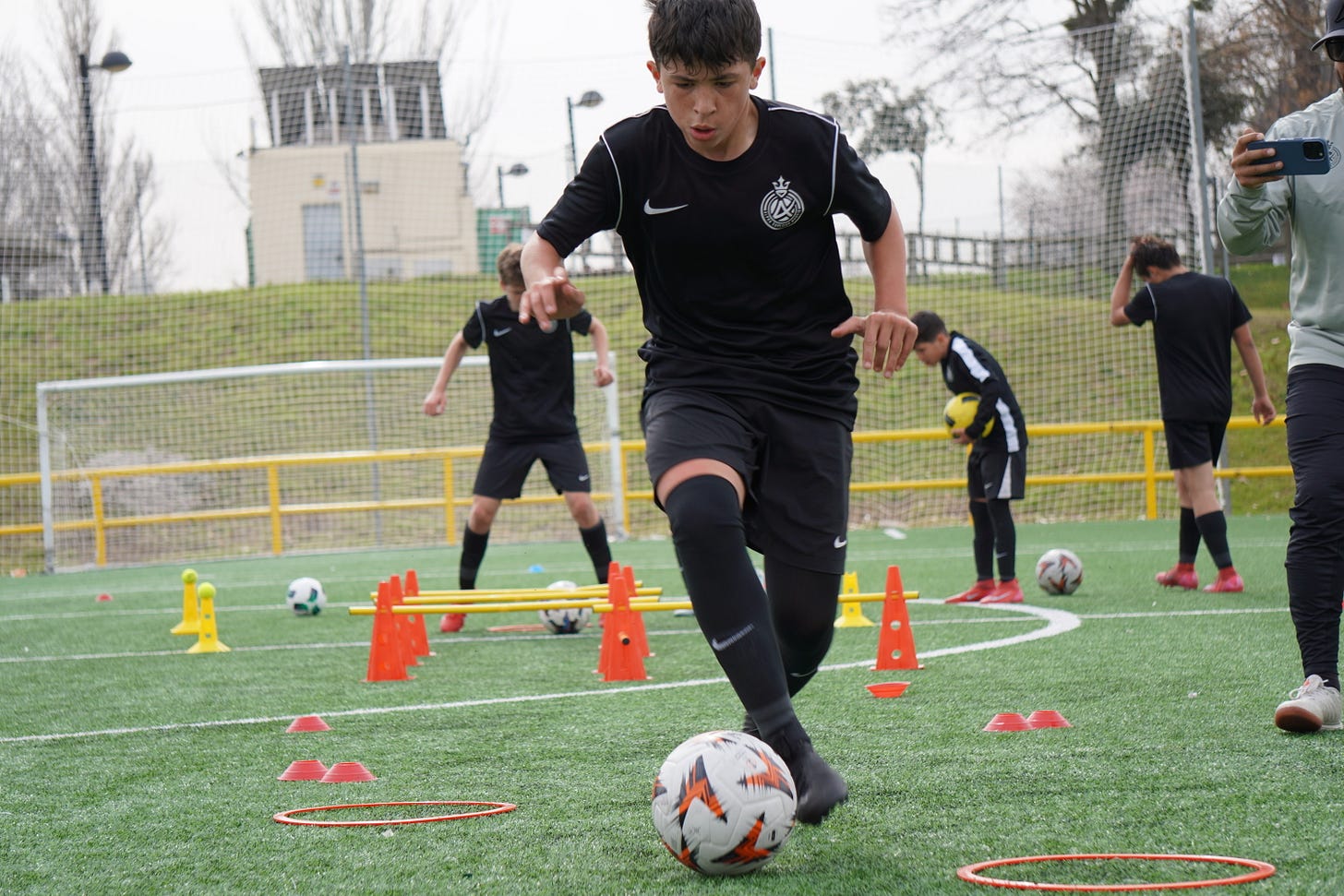
If this philosophy resonates with you, explore what we’re building at Forms Residency, where education, neuroscience, and football intersect to turn potential into mastery.