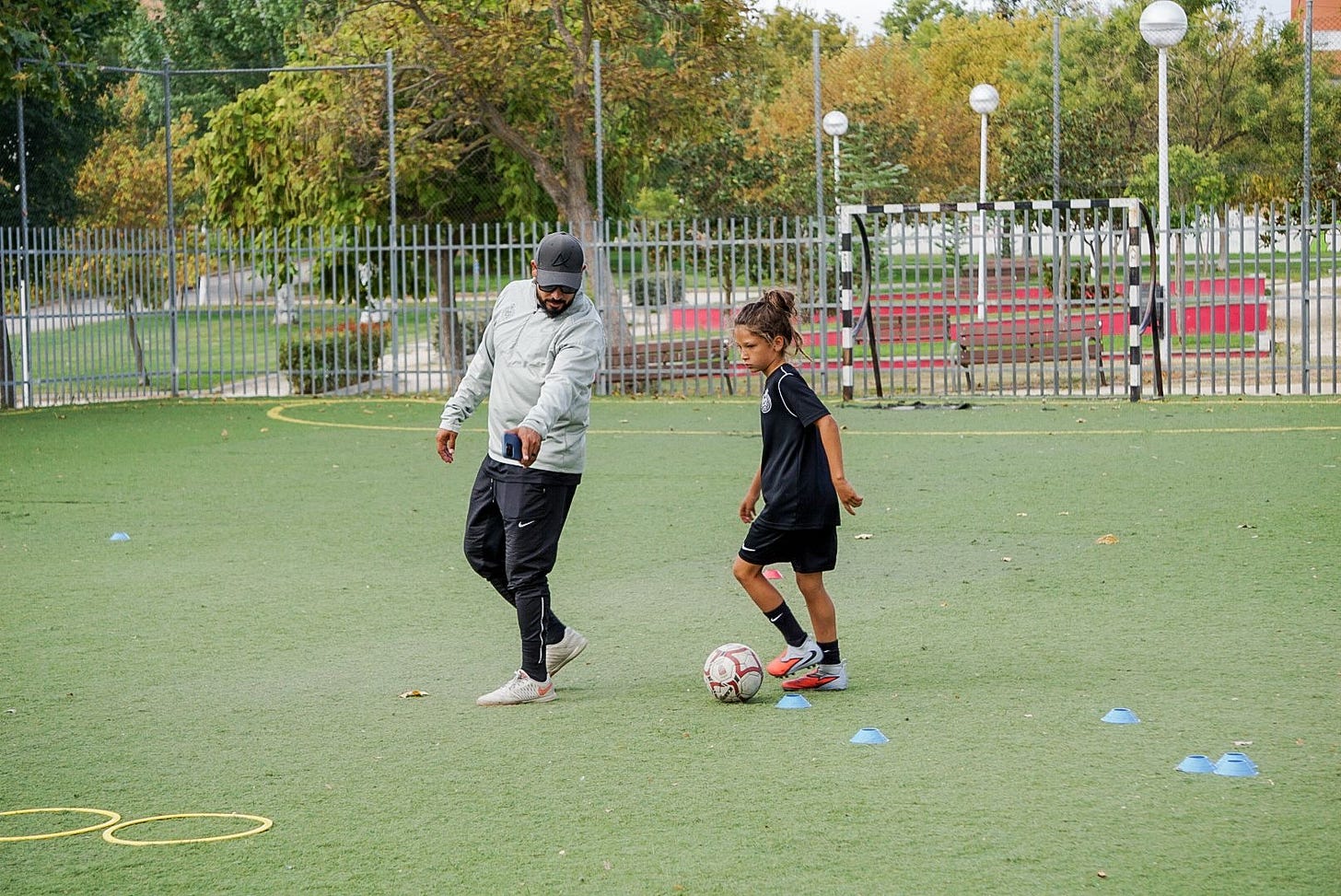
Designing for Error, Not Avoiding It
One of the quiet failures of conventional youth development is the systematic avoidance of error. Most conventional sessions are designed to look clean, mistakes are corrected immediately, and training modules are softened to preserve confidence. The unintended consequence of the manufactured session environment is player fragility. Players learn to operate only when conditions are favorable, and guidance is constant. Forms Academy takes the opposite stance, where error is not something to eliminate, but rather something to design for. The methodology deliberately exposes players to informative rather than random errors, because meaningful mistakes are the raw material of learning.
This begins with how problems are framed. In many environments, players are given tasks where the correct solution is obvious, and deviation is discouraged. Forms designs problems where multiple solutions exist, but each carries a cost. When a player chooses, the consequence is embedded in the game itself, whereby possession is lost or maintained, angles may appear or disappear, or pressure accelerates or subsides. Many of Forms’ designs within the session do not always require the coach to intervene. The environment delivers the feedback. Over time, players stop fearing mistakes because mistakes become data. They learn to adjust rather than freeze.
A related concept is error tolerance. Not all errors and mistakes are equal; some indicate exploration, others misunderstanding, and others demonstrate poor mental intensity and execution. Forms environments are tuned to distinguish between these, as players are not only allowed, but encouraged, to experiment at the edge of their abilities. What is not tolerated, however, is repeating the same error without adaptation. This distinction is critical. It teaches players that learning is not about perfection, but about progress and responsiveness. As they begin to self-monitor, the correction process moves inward instead of remaining external.
Another subject embedded in the methodology is delayed correction. Immediate feedback feels productive but often interrupts learning. When correction arrives too quickly, players outsource evaluation to the coach. Forms intentionally delays intervention so players experience the complete consequence chain of their decisions. A poor first touch affects the following action just as a rushed decision may carry third and fourth effects in transitional parts of the game. Feeling this sequence matters because it builds causal understanding rather than rule-following. When feedback is finally provided, it carries more meaningful weight because it connects to a lived experience rather than an abstract instruction.
Forms’ methodology also addresses how error interacts with confidence. Confidence built in error-free environments collapses when reality presents itself, which is why Forms develops confidence differently. Players learn that they can lose the ball, be pressed, make mistakes, and still remain functional. This produces a quieter confidence more deeply connected to self-belief in problem-solving rather than dominance. Our players do not need protection from difficulty; they should expect it. When the game becomes faster and less forgiving, they are not shocked by failure; they instinctively begin making progress because they have been subconsciously rehearsing recovery.
These white papers are intended to help parents understand why Forms Academy does not sacrifice robustness for polish. Our sessions and games will often appear chaotic and unpolished, but we have a purpose. Learning that survives pressure is built through exposure, consequences, and adaptation. Errors and mistakes are essential parts of development; you may consider them elements that light the path. As additional philosophies and frameworks are layered into this Substack, this picture will continue to expand, showing how Forms deliberately engineers environments that produce resilient, self-correcting footballers over the long term.