Why We Don’t Teach Team Tactics Before Age 12
Why We Don’t Teach Team Tactics Before Age 12
A Developmental Guide for Forms Academy Families
One of the most common questions parents ask is why younger players are not being taught structured team tactics. In many youth football environments, children under 12 regularly discuss formations, pressing triggers, and defensive systems. It can look like accelerated learning.
At Forms, our methodology takes a different approach, and this document explains exactly why.
*Tactics are not unimportant. They are essential to football. But they only become meaningful once the neurological, technical, and perceptual foundations required to execute them are already in place.
*
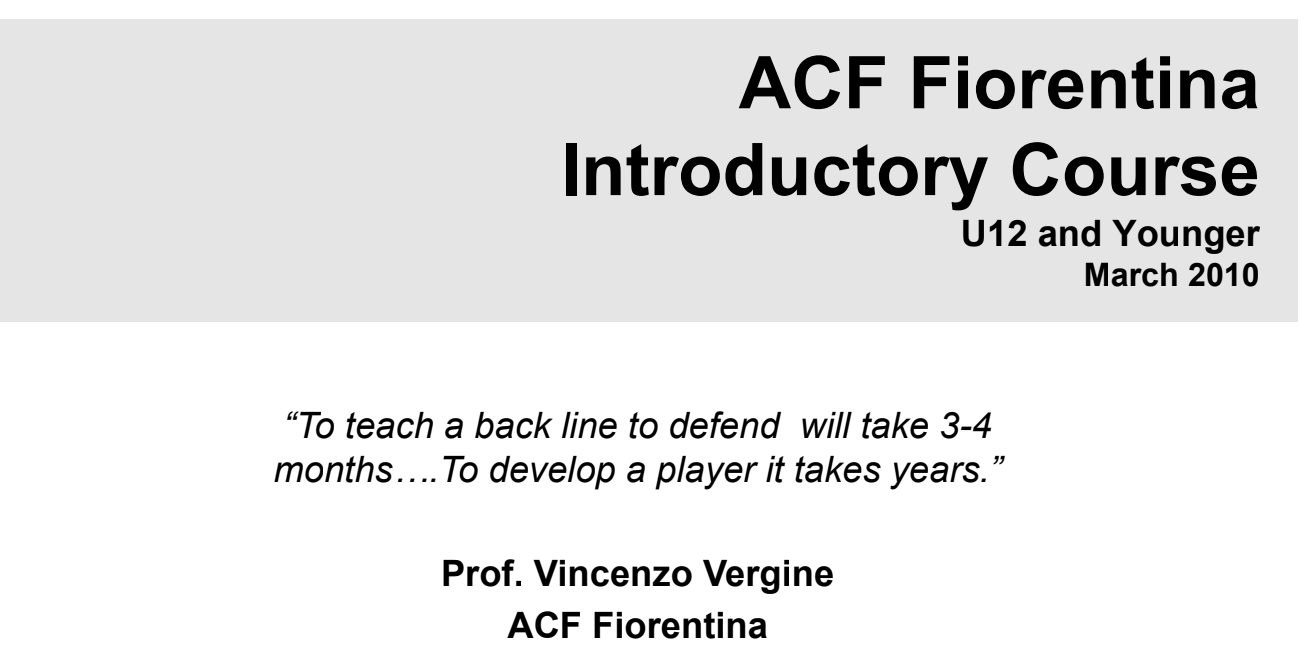
When tactics are introduced too early, children tend to memorize instructions rather than understand the game. Over time, this slows decision-making, reduces creativity, and limits long-term potential. Our goal is not to create teams that appear organized at age eight. Our goal is to develop players who possess the mastery, decision-making speed, and adaptability required to thrive at the highest levels of football.
Development Means Building Capabilities, Not Memorizing Systems
The word development is often misunderstood in youth football. Many programs assume it means teaching players where to stand and how to move within a formation. While those ideas matter at older ages, they are not the foundation of a player’s ability.
True development refers to the growth of the underlying capabilities that enable a player to perform under pressure: ball mastery, coordination, spatial perception, decision speed, balance, timing, and the ability to execute technical actions consistently.
Tactical systems do not create these abilities. They only organize them.
When a young player is asked to follow tactical instructions before these abilities exist, they may appear organized, but are actually relying on memorized guidance. They are thinking about what the coach said to do rather than reacting naturally to the game environment.
In football, where situations change every second, this dependency becomes a serious limitation. Players who rely on instructions hesitate when the game becomes unpredictable. By contrast, players who first develop strong technical control and problem-solving habits become far more adaptable. When tactics are eventually introduced, they can apply them with a genuine understanding.
The Neuroscience of Early Skill Development
Childhood is the most critical stage for building the neurological foundation of motor skill. During these years, the brain is rapidly forming the neural pathways responsible for coordination and movement.
Motor learning research shows that repeated, high-quality movements strengthen neural connections and improve the efficiency of communication between the brain and the body. Processes like myelination allow frequently used pathways to become faster and more reliable. When children perform thousands of controlled movements with the ball, the nervous system gradually develops automatic control over those actions, which researchers call motor programs.
When ball control becomes automatic, the brain is free to focus on reading the game and making decisions. Without that automaticity, players still rely on conscious attention to control the ball, leaving nothing left for tactics.
How Children Under Twelve Actually Learn
Children under twelve process information differently from older players. Developmental psychology research consistently shows that younger children learn most effectively through exploration and direct interaction with their environment, not through instruction-following.
When young players are given rigid tactical structures, the game becomes an exercise in remembering directions rather than interpreting situations. Instead of scanning the field and responding to what they see, they attempt to recall where they were told to stand.
This can slow decision-making and discourage experimentation. Over time, players can become cautious and dependent on coaching instructions rather than developing confidence in their own judgment. At Forms Academy, we want players to build the habit of interpreting the game independently, because once formed, it never leaves.
The Critical Window for Technical Development
The years between approximately six and twelve represent one of the most important windows for motor skill development in a child’s life. During this stage, the brain is highly responsive to coordination-based learning. Balance, rhythm, spatial awareness, and fine motor control are acquired far more easily now than they will be in adolescence.
In football, this window is where players develop the core technical abilities that define their long-term ceiling: first touch, dribbling control, turning mechanics, ball manipulation, and body-ball coordination.
If these skills are not developed during this period, they become significantly harder to acquire later. This is why the early years at Forms Academy focus so heavily on ball mastery and movement quality.
The Hidden Cost of Early Tactical Coaching
Early tactical coaching can produce teams that look impressive in youth competitions. Players hold positions, follow rehearsed patterns, and execute organized movements. This can appear to parents and coaches alike like meaningful progress.
But this success is often misleading. The tactical structure compensates for missing individual abilities. Technical weaknesses are hidden by rigid positional responsibilities, and decision-making is simplified by constant sideline instruction.
As players grow older and the game becomes faster, more physical, and less predictable, those limitations begin to surface. Creativity, adaptability, and confidence under pressure become increasingly important, and players who never developed those qualities can struggle significantly.
Forms Academy prefers to build players who can succeed regardless of the tactical system they play in.
What the Forms Academy Development Path Looks Like
Our development progression aligns with both neurological growth and football learning: -
U4–U12: Emphasis on ball mastery, coordination, bilateral development, and creative problem-solving through small-sided play. Players learn to interact with the ball instinctively and to interpret situations without rigid instruction. -
U12 and beyond: Once players demonstrate consistent technical control and stronger decision-making capacity, tactical concepts enter the curriculum. At this stage, they can understand spacing, defensive organization, positional relationships, and collective movement. Because their technical foundation is already secure, they learn tactics quickly and apply them effectively.
Tactics become tools that enhance what the player can already do, rather than a framework that substitutes for what they haven’t yet learned.
Why Small-Sided Play Is Central to Early Development
Small-sided games are a cornerstone of early training at Forms Academy. These environments increase the number of meaningful interactions each player has with the ball: more touches, more pressure situations, more decision-making moments per hour of training.
Small-sided play encourages players to explore solutions, adapt to changing situations, and develop creativity with the ball. Spatial awareness and problem-solving develop naturally, without lengthy explanations. Over time, players begin to recognize patterns within the chaos of the game, and that pattern recognition is the organic foundation of all future tactical understanding.
What About Falling Behind?
Some parents reasonably wonder whether their child might fall behind if tactical instruction is delayed. When they see other teams organizing into formations at young ages, it can seem as if those players are learning the game more quickly.
This concern reflects a common misunderstanding: the difference between organization and development.
Early tactical coaching can make teams look organized. Players may hold positions and execute rehearsed movements. But this does not mean they are becoming more intelligent footballers. In many cases, they are simply following instructions.
Football intelligence develops from technical mastery, perception of the game environment, and repeated experience solving problems with the ball. When those foundations are strong, tactical learning later becomes dramatically faster and far more effective.
The players who look most impressive at age eight are not always the players who develop into the best footballers at sixteen or eighteen. Long-term development and short-term organization are genuinely different goals, and they sometimes pull in opposite directions.
What You May Notice During Training
If you observe training sessions for younger players at Forms Academy, you may notice some differences from traditional youth teams: -
Less discussion of formations and positional assignments -
More time developing ball control, movement coordination, and creative problem-solving -
Greater freedom for players to experiment and make their own decisions with the ball
These characteristics are deliberate. The goal of this stage is not short-term tactical organization. It is the neurological and technical foundation that will allow your child to thrive at every stage of development that follows.
The Long-Term Advantage
Players who spend their early years mastering the ball and learning to read the game independently develop lasting advantages. Their decision-making becomes faster because their technical skills no longer require conscious attention. They stay confident under pressure because they are comfortable with the ball in any situation. They adapt easily to different tactical systems because their understanding of football is built on perception and problem-solving rather than memorization.
By the time tactical systems are introduced, these players execute them with greater intelligence, creativity, and effectiveness than players who were taught tactics before mastering the ball.
Forms Academy does not avoid tactics. We introduce them at the stage of development where they become most meaningful.
The early years of football development should focus on building the technical and neurological foundations that allow players to perform at high levels later in their careers. When children first learn to master the ball, coordinate their movements, and interpret the game environment, tactical understanding follows naturally and rapidly.
Forms Academy is committed to developing players who can think independently, adapt to any system, and express themselves confidently within the game. For that reason, in the earliest stages of development, mastery comes first. Tactics come later.
-Ron Forms Academy | formsacademy.com